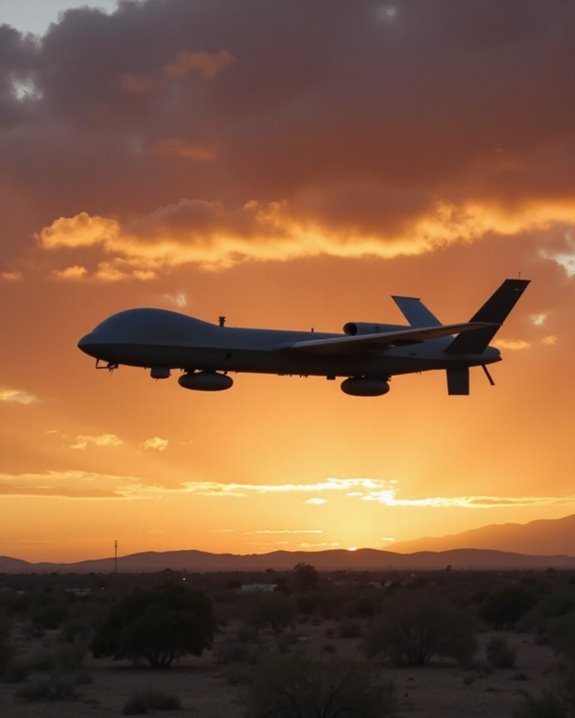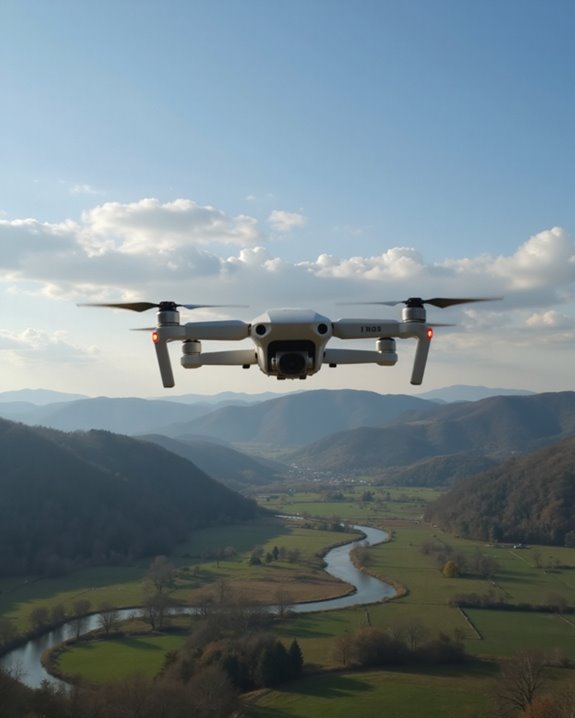

Consumer drones typically fly 1-5 miles, with premium models like the DJI Mini 3 Pro reaching up to 10km in ideal conditions. Your actual range depends on several factors: battery life (usually 20-30 minutes), weather conditions, payload weight, and those pesky legal requirements! The FAA requires maintaining visual line-of-sight, so no sending your drone to grab coffee from the next town over. Military drones, however, can travel over 1,000 miles—talk about drone envy!
Key Takeaways
- Consumer drones typically have flight ranges of 1-5 miles under ideal conditions, with premium models potentially reaching up to 10km.
- Battery life is the primary limiting factor, with most consumer drones offering 20-30 minutes of flight time before needing recharging.
- Legal regulations require maintaining visual line-of-sight, restricting practical range regardless of technical capabilities.
- Weather conditions (wind, temperature), payload weight, and signal interference significantly reduce actual flight distance.
- Range-extending technologies like mesh networks, high-gain antennas, and hybrid power systems can increase drone flight distances.
Maximum Range of Consumer Drones
You may be interested

Drone Crash Incident in New Jersey: What Happened?

Drone Strike Location in Tel Aviv: Key Details
When exploring the world of drone technology, understanding the maximum flight range of consumer drones is perhaps the most essential factor for potential pilots. Most consumer drones can fly between 1 to 5 miles from their controller, with popular models like the DJI Mini 3 Pro and Autel EVO Lite+ leading the pack. Payload Effects dramatically influence these distances—the more equipment your drone carries, the shorter its range will be!
Environmental conditions also play a significant role in determining real-world performance. Wind resistance, signal interference, and battery quality can all reduce your effective flying distance. Speed Tradeoffs come into play too; flying faster drains battery quicker but covers more ground. Remember, manufacturer specifications are typically measured in ideal conditions, so your actual mileage may vary depending on where you’re flying!
Additionally, drones operating on the lower 2.4GHz frequency bands tend to have superior range and obstacle penetration compared to those using 5GHz systems.
Recommended Products

GPS Drone with 4.5 Inch Screen on Controller: The GPS drone long range remote features a 4.5 inch HD display for real-time transmission, instantly previewing footage and capturing every moment. Stay in full control of your drone’s flight with crystal-clear visuals.

【6K Ultra HD + 3-axis Brushless Gimbal】 Adopting a professional imaging system and imported sensors, Bwine 18MP camera drone captures sharp 6K photos and fluent 4K 30fps videos. The 3-axis brushless gimbal raises stability accuracy by 300%, keeping steady in strong winds and high-speed flight. Perfect for extreme outdoor lovers, farm and ranch inspection, it lets you record fine scenery effortlessly.
Legal Limitations on Drone Flight Distances
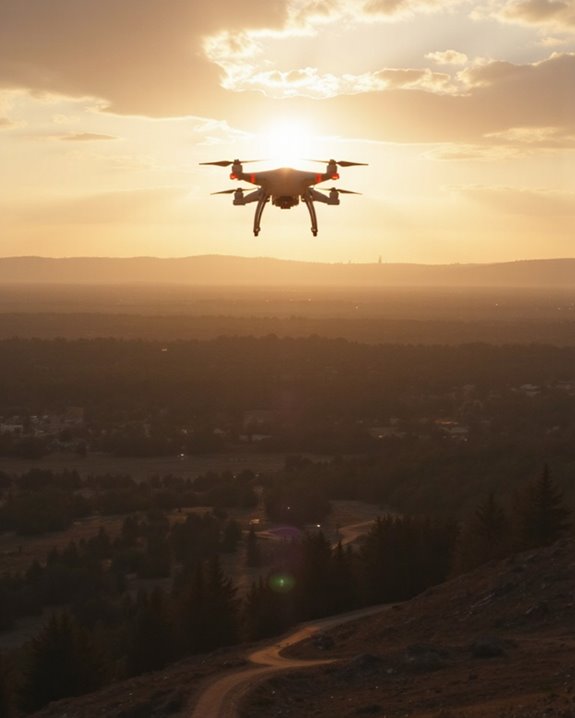
Although drones can technically fly impressive distances, legal restrictions greatly limit how far you can actually operate them in practice. The most significant constraint is the Visual Line of Sight (VLOS) requirement, which mandates that operators must maintain unaided visual contact with their drone at all times!
Zone Restrictions vary by location, with special rules near airports, government facilities, and public events. Many recreational flyers are surprised to learn that regardless of their drone’s advertised range, they legally can’t fly beyond where they can see it. Permit Requirements come into play for those seeking exceptions, particularly for commercial operations. The FAA’s Part 107 regulations govern most non-recreational flights, while the upcoming Part 108 may eventually allow Beyond Visual Line of Sight operations with proper certification. Additionally, many popular drones such as the DJI Mini 3 offer up to 10km range, but operators must still comply with legal line-of-sight rules.
Impact of Weather and Terrain on Drone Range
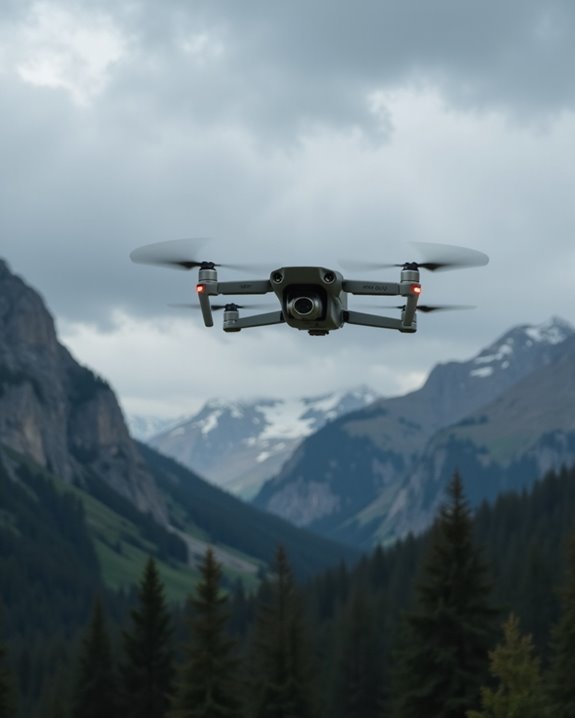
Beyond the legal restrictions that limit your drone flights, Mother Nature and landscape features play equally important roles in determining how far your drone can actually travel. Wind Resistance is perhaps the most significant factor, with strong gusts dramatically reducing range by forcing your drone to work harder just to maintain position!
Terrain Variations create additional challenges that can’t be ignored. Flying over mountains? Be prepared for unpredictable air currents and micro-climates that might cut your adventure short. Dense forests and urban environments require closer monitoring, while water crossings pose the nerve-wracking risk of an unrecoverable drone dip.
Temperature extremes affect battery performance too – that winter flight might end sooner than expected when your power source struggles in the cold. Smart pilots always check weather forecasts before launch! Additionally, knowing your drone’s wind resistance capabilities can help you plan safer and more efficient flights in challenging conditions.
Battery Life and Its Effect on Flight Distance
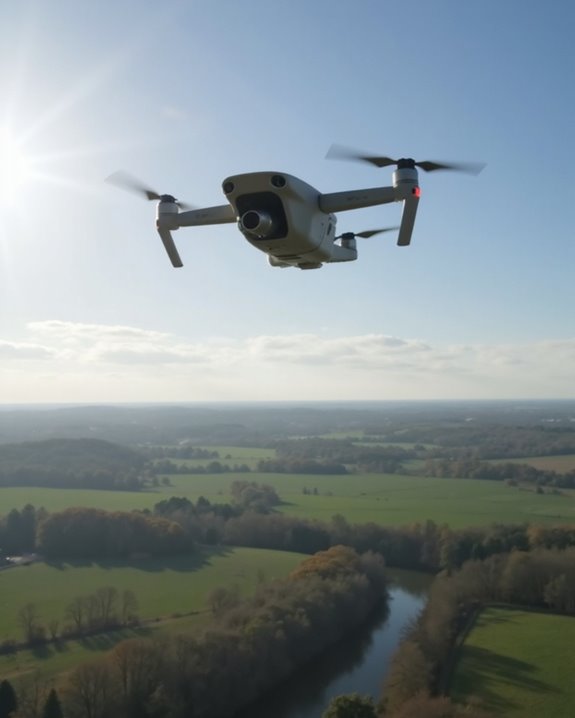
How much distance can your drone truly cover before the dreaded “low battery” warning flashes? The answer depends on several critical factors that directly impact your flying range.
Battery capacity, measured in mAh, serves as the primary determinant of flight distance, with industrial models like the DJI Matrice achieving impressive 55-minute flights! However, Battery Degradation gradually reduces this performance over time, with each charging session slightly diminishing overall capacity. Environmental conditions play a massive role too – flying in cold weather or strong winds forces motors to work harder, reducing Cycle Efficiency and draining power faster.
The record-holder JOUAV CW-30E can fly for an astounding 600 minutes, but most consumer drones manage just 20-60 minutes. Remember, a heavy payload or camera equipment will greatly reduce your range, so plan your aerial adventures accordingly!
Recommended Products
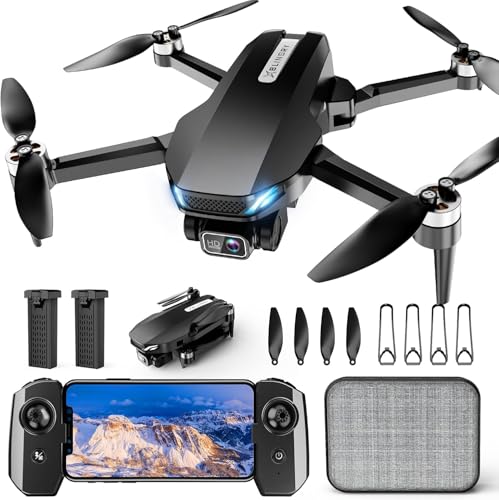
【Clear 2K Camera & Real-Time FPV View】Capture clear photos and videos with the built-in 2K HD camera and adjustable 90° lens. Connect the drone to the BLINORY GO app to enjoy real-time FPV viewing, save your footage directly to your phone or SD card, and easily share family moments, travel views, or outdoor fun.
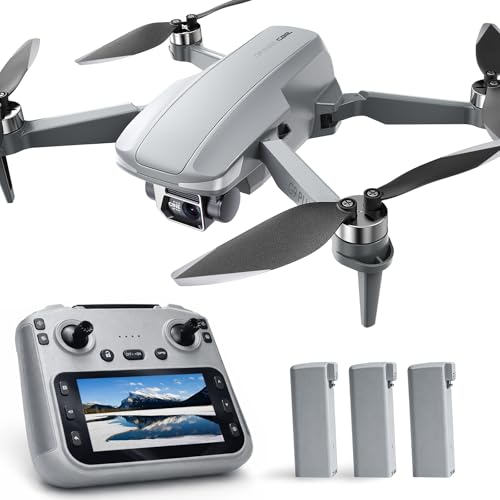
【4.5-Inch Built-in HD Display Remote Controller】: The included remote features a large non-touch 4.5-inch high-definition screen that provides real-time FPV live video feed directly on the controller for an immersive, instant flying experience. It comes with a free 32GB SD card for immediate photo and video storage, perfect for creators and beginners who want simple, reliable operation with extended control range.
Internet-Controlled Drone Capabilities
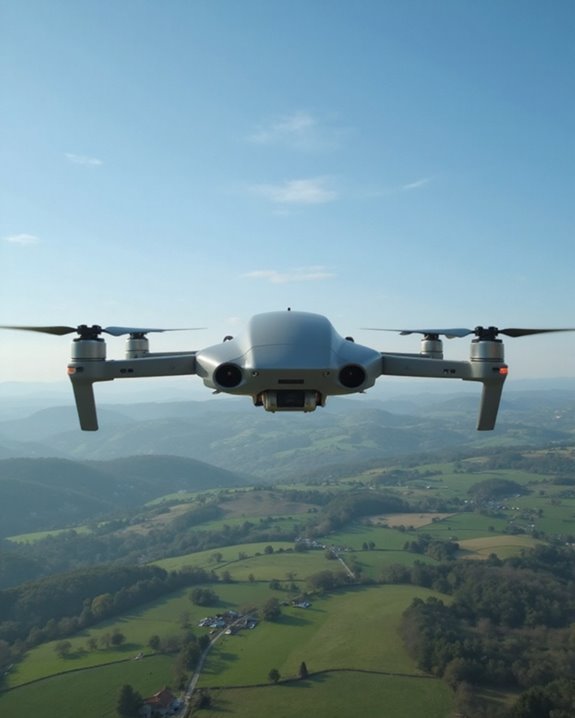
When it comes to pushing the boundaries of drone flight range, internet-controlled capabilities have revolutionized what’s possible for pilots everywhere! Unlike traditional RF-controlled drones, these advanced flying machines can operate from literally any location with an internet connection.
Remote Piloting has never been more flexible, allowing operators to smoothly shift control between different pilots or devices using simple web interfaces or mobile apps. The real game-changer? These drones aren’t limited by physical distance! With 5G integration in newer models, pilots can access real-time telemetry data and high-definition video streams from halfway around the world.
Many internet-controlled drones feature impressive Autonomous Modes, executing complex flight paths while avoiding obstacles without constant input. Just program your mission through cloud-based systems, sit back, and watch your drone perform—even in challenging environments!
Recommended Products
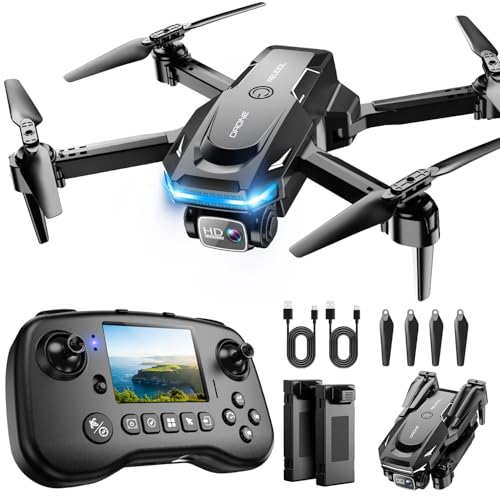
The PK01 drone's remote comes with a super handy built-in screen—no phone needed—so you can watch live HD footage and check flight stats right in your hands. (An SD card is required to save images and videos; not included) Powered by tough brushless motors, this little flyer is strong, smooth, and built to last. With one-key takeoff/landing, headless mode, and even 360° flips, you’ll look like a pro in no time. Ready for takeoff?🤩


📷【Drone with Camera】 Equipped with a 1080P HD 80°adjustable lens, the drone not only assists you in catching every wonderful moment from a bird's-eye perspective, but is also perfect for selfies. It can even be used to check the roof of a house or other hard-to-reach areas. You can enjoy the real-time HD pictures and videos via the APP. Automatically take photos/videos with gestures.
Comparing Flight Ranges by Drone Type
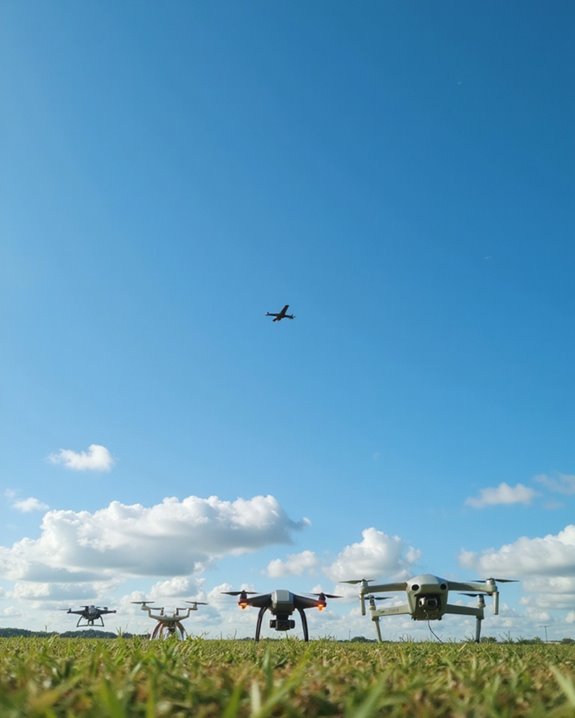
The vast spectrum of drone flight ranges reveals dramatic differences across various drone categories, with capabilities ranging from just a few hundred feet to thousands of miles! Recreational drones typically stay within visual range, while mid-range consumer options like FPV drones can reach impressive distances of 0.5 to 4 miles.
The VTOL variations demonstrate remarkable endurance, with the JOUAV CW-30E boasting an incredible 480-minute flight time! Fixed Wing Contrasts become evident when comparing multi-rotor commercial drones (typically limited to 9.3 miles) with their fixed-wing counterparts, which can soar up to 62 miles. For those seeking premium consumer performance, both the DJI Mavic 3 Pro and Autel EVO II Pro offer control ranges approaching commercial-grade capabilities at 9.3 miles—quite the feat for non-professional equipment!
Recommended Products

Lightweight & Portable Design - Weighing just 151g [9] and C0 certified, this compact drone features full-coverage propeller guards for safer, worry-free transport and flight.

High-Performance Design: This drone antenna operates within a frequency range of 5500-6000 MHz, providing optimal signal transmission for enhanced flight performance and connectivity

High-Performance Design: This drone antenna operates within a frequency range of 5500-6000 MHz, providing optimal signal transmission for enhanced flight performance and connectivity
Range-Extending Technologies and Methods
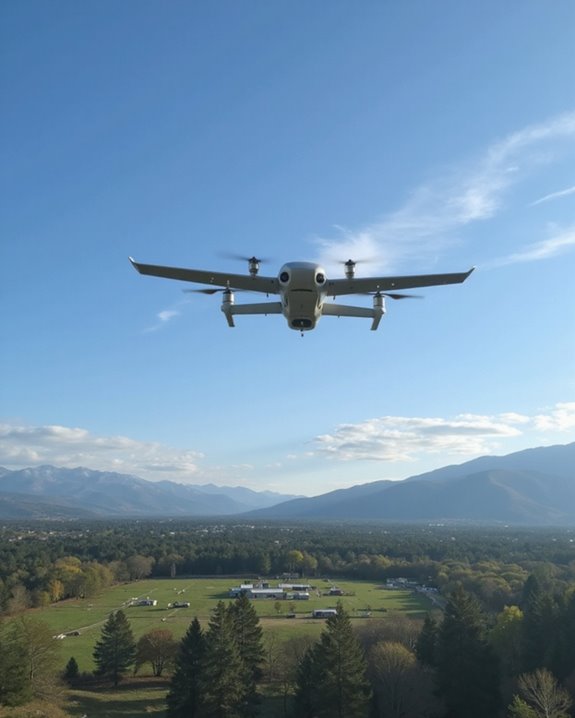
Diving into the fascinating world of range-extending technologies reveals how modern drones can push past their inherent limitations! Advanced communication systems now employ Mesh Networks that create multi-hop signal paths, allowing drones to maintain connections far beyond traditional boundaries. When signals can’t reach directly, these networks cleverly relay data through intermediate nodes, effectively leapfrogging across vast distances.
Hybrid Propulsion systems represent another game-changing advancement, combining battery power with fuel cells or solar technology. This smart pairing gives pilots the best of both worlds – clean electric flight with the extended range of alternative energy sources! Meanwhile, high-gain directional antennas and signal amplifiers boost transmission strength, while AI-driven flight controls automatically optimize routes based on battery life and environmental conditions. The result? Drones that fly farther than ever before, opening exciting new possibilities for both hobbyists and professionals.
Recommended Products
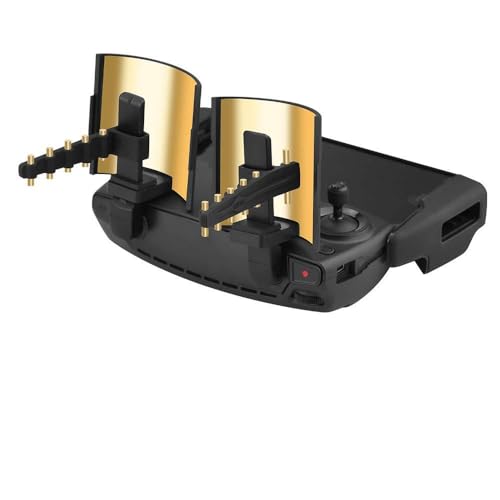
『Range Extender for Drone』Yagi Antenna + Parabolic Range Extender for Mavic Mini/Mavic 2/Mavic PRO/Mavic AIR ,2 Pairs Drone Accessories Set .

✔Specially designed for DJI RC Mini3/Mini3 Pro(Note:Does not include the remote control.)

This signal enhancement kit is specially designed for DJI Mavic Mini / Mavic Air / mavic 2 / mavic 2 with DJI Smart Controller / Phantom 4 Pro/3SE to provide signals for the flight of drones, reduce the occurrence of flight accidents, and achieve signal double enhancement.
Regulatory Considerations for Long-Distance Flights
As exciting as range-extending technologies might be, drone pilots must navigate a complex web of regulations that often limit how far they can legally fly! The Visual Line of Sight (VLOS) rule is the primary restriction, keeping most recreational flights within 1-2 miles of the operator.
Regulatory Enforcement varies dramatically between jurisdictions, with FAA fines reaching thousands of dollars for unauthorized beyond-visual-line-of-sight operations. Pilots seeking longer flights must obtain specific waivers, which typically require collision avoidance technology and detailed contingency plans—not just a wish to see what’s over the horizon!
International Compliance adds another layer of complexity, as drone laws change the moment you cross borders. Remember, just because your drone can fly 5+ miles doesn’t mean you’re legally cleared for takeoff!
Future Technological Developments in Drone Range
Future of drone range technology stands at the precipice of breathtaking innovation, with several groundbreaking developments poised to shatter current limitations! Research into Quantum Batteries shows promising results that could exponentially increase energy density beyond today’s solid-state options. Meanwhile, Neural Propulsion systems are learning to adapt to flight conditions in real-time, maximizing efficiency with every rotation!
Hydrogen fuel cells and hybrid power systems are rapidly maturing, offering flight times that would make current drone pilots green with envy. The integration of AI-powered navigation with 5G connectivity means drones won’t just fly farther—they’ll fly smarter. Advanced thermal imaging and LiDAR capabilities guarantee these extended journeys collect more valuable data than ever before. Who knew these buzzing gadgets would evolve so quickly?
Frequently Asked Questions
Can Drones Be Programmed to Return Home Automatically if Battery Depletes?
Most modern drones feature battery safeguards with return programming capabilities, automatically initiating a flight back to their takeoff location when power levels reach predetermined thresholds, reducing the risk of mid-air power loss.
How Does Altitude Affect Maximum Drone Range?
Altitude factors greatly impact range dynamics. Higher altitudes create thinner air, requiring drones to expend more energy, reducing efficiency and maximum distance. Lower altitudes may offer better battery performance but increased air resistance.
Are There Special Licenses Required for Night-Time Drone Flights?
Like owls adapting to hunt after dusk, drone pilots must evolve their certifications. Part 107 pilots need updated training on Nighttime Regulations, while recreational flyers face no special License Requirements beyond anti-collision lighting installation.
Can Drones Fly Safely in Light Rain or Snow?
Some weather-resistant drones can operate in light precipitation with proper precautions. Weather effects vary by model, with specialized drones offering better snow resilience. Most consumer models, however, remain vulnerable to moisture damage.
What Happens if a Drone Loses Connection With Its Controller?
When a drone loses connection, failsafe protocols typically activate. Many drones automatically return home, hover in place, or land safely. Some models attempt signal recovery before initiating emergency procedures to prevent accidents or flyaways.